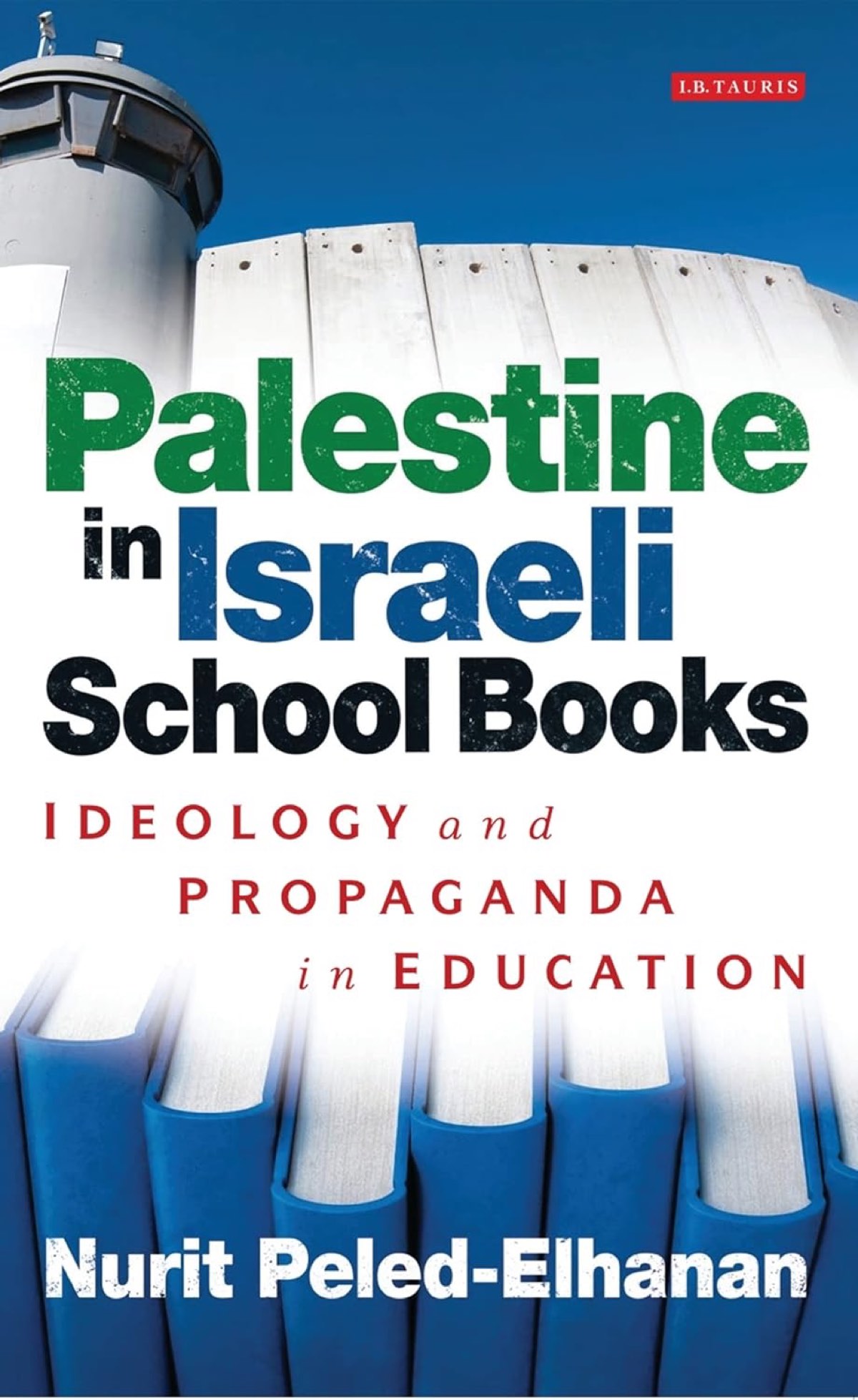
📚 Palestine in Israeli School Books: Ideology and Propaganda in Education
👩🏫 Brief Biography of the Author
Nurit Peled-Elhanan is an Israeli scholar of language, education, and discourse analysis. She has taught at the Hebrew University of Jerusalem and is known for her critical studies of Israeli educational materials, especially how Palestinians and non-Western Jews are represented in school textbooks. She is also a peace activist and was awarded the Sakharov Prize for Freedom of Thought by the European Parliament in 2001. 🕊️
She comes from a prominent Israeli family: her father, Matti Peled, was an Israeli major-general who later became a peace activist and critic of Israeli occupation. Her daughter, Smadar, was killed in a 1997 suicide bombing in Jerusalem; after this tragedy, Peled-Elhanan became even more committed to Israeli-Palestinian dialogue and criticism of violence and occupation. 💔🕊️
📖 Summary of the Book
Palestine in Israeli School Books: Ideology and Propaganda in Education examines how Palestinians and Palestine are represented in Israeli school textbooks, especially in history, geography, and civic studies. The author explains that her aim is not to describe the entire Israeli education system, but to study one central question: how are Palestinians portrayed to young Israelis who will later enter compulsory military service? 🎓📚
Peled-Elhanan argues that Israeli schoolbooks function less as neutral educational tools and more as instruments of collective memory and national identity formation. According to her, textbooks help reproduce the Zionist national narrative, presenting Jewish Israelis as returning natives while often erasing or minimizing Palestinian historical presence in the land. 🧠📜
A major argument of the book is that Palestinians are often represented negatively or indirectly. They appear as threats, demographic problems, refugees, terrorists, primitive villagers, or obstacles to Israeli security, rather than as a real people with culture, history, daily life, suffering, and political rights. In geography books, Palestinian towns and borders may be minimized or erased, while Israeli settlements are normalized. 🇵🇸🗺️
The book also criticizes how Israeli textbooks discuss the 1948 Palestinian exodus/Nakba. Peled-Elhanan argues that many books use language such as “fled,” “abandoned,” or “deserted,” which can shift responsibility away from Israeli actions and imply that Palestinians lost their land because they left it. Even when expulsions are admitted, she argues, they are often reduced, justified, or presented as necessary for the creation of a Jewish majority. 🕯️📖
In her conclusion, Peled-Elhanan states that Israeli textbooks generally present the conflict from a military-Zionist perspective, leaving little room for Palestinian voices, Palestinian suffering, or moral ambiguity. She argues that the textbooks do not simply teach facts; they train students to accept a particular worldview in which Palestinians are often seen as a problem to be managed, controlled, or overcome. ⚖️🪖
✍️ In Simple Terms
The book argues that Israeli school textbooks teach students to see Palestine mainly through the lens of Zionist history, Israeli security, and Jewish national memory. Palestinians are rarely shown as equal human beings with their own history and rights. Instead, they are often portrayed as enemies, threats, or invisible people. For Peled-Elhanan, this kind of education helps normalize occupation and makes it easier for young Israelis to accept military control over Palestinians. 🇵🇸📚🕊️