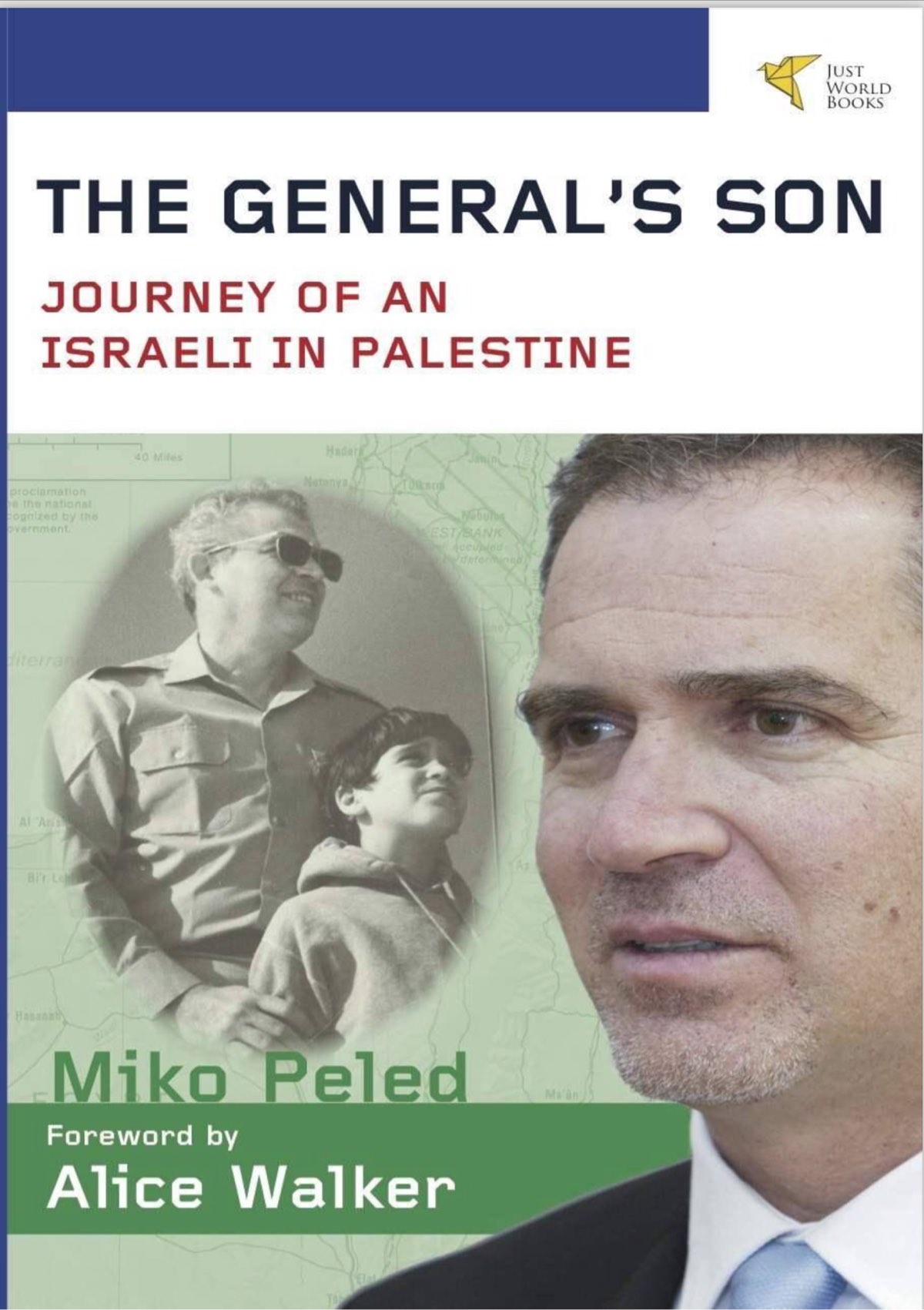
The General’s Son: Journey of an Israeli in Palestine
📘 Introduction: Short Biography of the Author
Miko Peled is an Israeli writer, peace activist, and martial artist. He was born in Jerusalem in 1961 into a prominent Zionist family. His maternal grandfather, Dr. Avraham Katznelson, was a Zionist leader and a signer of Israel’s Declaration of Independence. His father, General Matti Peled, fought in the 1948 war, became one of Israel’s senior generals in the 1967 war, and later transformed into a peace activist and professor of Arabic literature.
Miko Peled himself grew up within Israeli patriotic culture and served in the Israeli military. Later, after moving to the United States and becoming a karate teacher, he began questioning the official Israeli narrative. A turning point came in 1997, when his 13-year-old niece Smadar was killed in a Palestinian suicide bombing in Jerusalem. Instead of turning toward revenge, Peled began a deeper search into the causes of the conflict, eventually meeting Palestinians, visiting the occupied territories, and becoming an advocate for Palestinian rights.
📖 Summary of The General’s Son: Journey of an Israeli in Palestine
The General’s Son is both a memoir and a political awakening. It tells the story of how Miko Peled moved from being the son of Israel’s military and Zionist elite to becoming a critic of Israeli occupation and a supporter of Palestinian freedom.
The book begins with Peled’s family background. He was raised in a respected Zionist household where military service, national pride, and the story of Israel’s founding were central to identity. His father, Matti Peled, was not an ordinary figure. He was a celebrated Israeli general who helped shape Israel’s military power, especially during the 1967 war, when Israel captured the West Bank, Gaza Strip, Golan Heights, and Sinai. But Matti later changed direction, becoming a professor of Arabic literature, a member of the Knesset, and a peace activist who warned that occupation would destroy both Palestinians and Israelis morally.
A major emotional center of the book is the death of Peled’s niece, Smadar. Her killing could easily have hardened Peled’s views against Palestinians. Instead, it pushed him to ask harder questions: why would young Palestinians carry out such an act, and what political reality produced such desperation? This tragedy became the beginning of his journey away from inherited Zionist assumptions.
Peled then describes how he joined Jewish-Palestinian dialogue groups in California. For the first time, he sat with Palestinians as equals and heard a very different history from the one he had been taught. Israelis called 1948 the “War of Independence”; Palestinians called it the Nakba, or catastrophe. He struggled with this at first, but chose to stay, listen, and confront the possibility that his education had left out crucial truths.
The book also examines fear. Peled writes about the fear Israelis are taught to feel toward Palestinians, even when they have never truly known them. During his visits to the West Bank, he realizes that this fear works like a “virus,” shaping Israeli attitudes and blocking human contact. Meeting Palestinian activists, families, and ordinary people allows him to see the “enemy” as human beings with their own pain, dignity, and history.
Another important theme is moral inheritance. Peled does not reject his family, his Jewish identity, or his love for his homeland. Rather, he argues that true loyalty requires honesty. His father’s transformation from general to peace activist becomes a model for his own journey. The book presents liberation not as hatred of one’s people, but as freedom from ideology that hides another people’s suffering.
🕊️ Core Message
The central message of The General’s Son is that peace cannot be built on fear, domination, or denial. Peled argues that Israelis must confront Palestinian suffering honestly and recognize Palestinians as equal human beings. The book’s deeper challenge is not merely political; it is moral: people must be willing to cross inherited boundaries, listen to the other side, and abandon myths that justify injustice.
⚖️ Critical Note
The book is powerful because it is personal, but it is also clearly written from Peled’s activist perspective. Readers who support mainstream Zionist narratives may see it as one-sided. Still, its value lies precisely in its challenge: it forces readers to ask whether loyalty to one’s people should mean defending every national action, or whether true moral courage sometimes means confronting one’s own side.