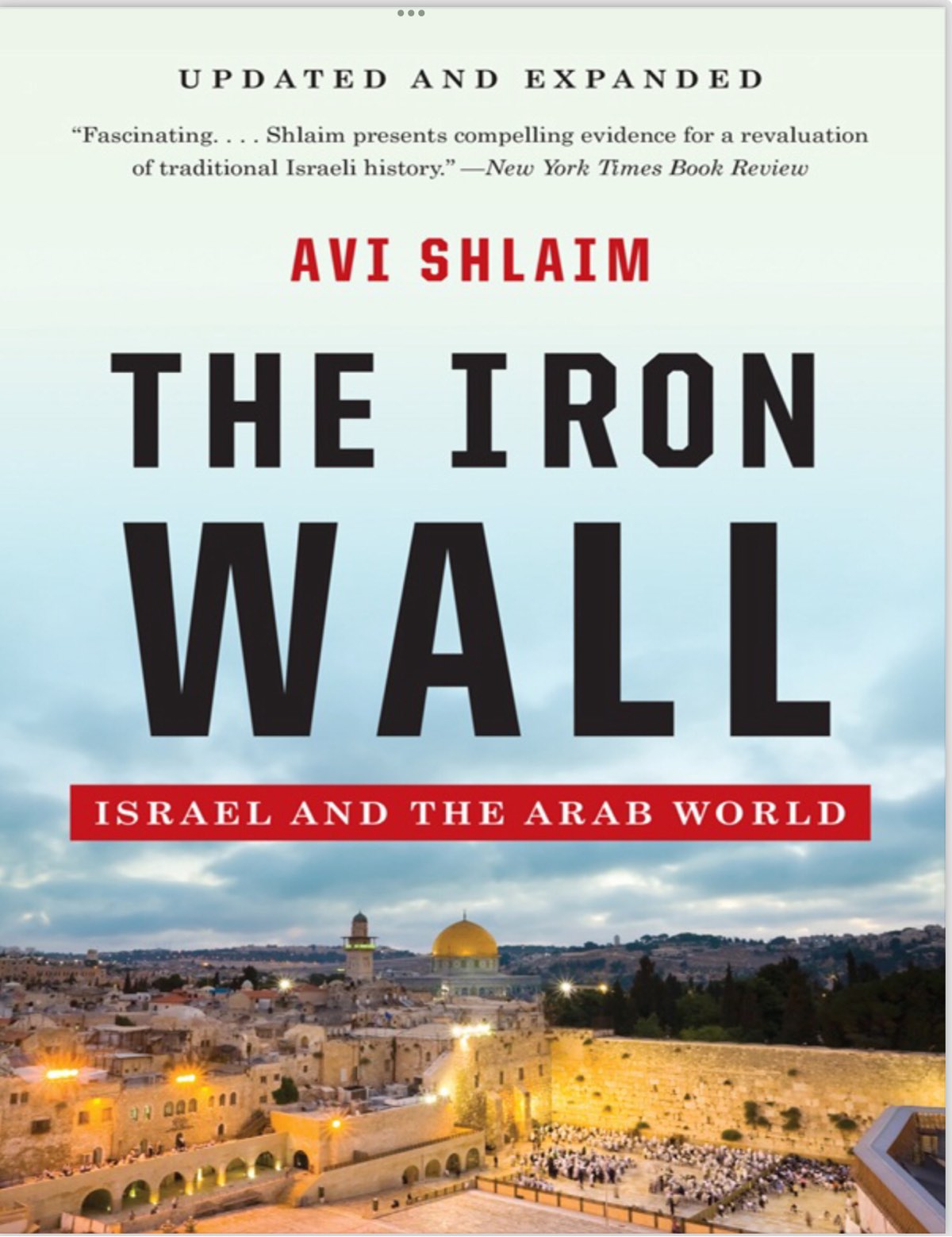
📚 The Iron Wall: Israel and the Arab World — A Brief Summary
👨🏫 About the Author
Avi Shlaim is an Iraqi-born Jewish historian who was born in Baghdad in 1945 and moved to Israel with his family in 1950. He describes himself as an Arab Jew, noting that his family had lived in Iraq for centuries and had traditionally lived in harmony with their Muslim neighbors. Later, he became a professor of international relations at the University of Oxford.
Although raised in Israel and having served in the Israeli army, Shlaim gradually developed a more critical view of Israeli policies through his historical research. He accepts Israel’s legitimacy within its pre-1967 borders but strongly criticizes Israeli settlement policies in the territories occupied after 1967.
⸻
🏛️ What Is The Iron Wall About?
The Iron Wall is a comprehensive study of Israeli foreign policy and Israel’s relations with the Arab world from 1948 onward. Shlaim presents what he calls a revisionist interpretation of Israeli history, challenging many traditional Zionist narratives about the Arab-Israeli conflict.
The book’s title comes from the Zionist concept of the “Iron Wall,” originally associated with Ze’ev Jabotinsky. The idea was that Jewish statehood in Palestine could only be secured through overwhelming strength, after which negotiations with Arab neighbors could take place from a position of security. Shlaim examines how this strategy influenced Israeli policy throughout the state’s history.
⸻
🔍 Main Arguments of the Book
Shlaim argues that:
🔹 Traditional Israeli narratives often portray Israel as consistently seeking peace while facing unrelenting Arab hostility.
🔹 Newly declassified Israeli archives reveal a more complex picture than the conventional account suggests.
🔹 Political deadlocks and failures in the peace process cannot be explained solely by Arab rejectionism; Israeli policies and decisions also played a significant role.
🔹 The conflict should be studied through critical examination of documentary evidence rather than nationalist myths.
⸻
📖 The “New Historians”
Shlaim is considered one of Israel’s “New Historians,” alongside figures such as Benny Morris and Ilan Pappé.
Using declassified Israeli archives, these historians challenged several established narratives concerning:
📍 The 1948 war
📍 The Palestinian refugee crisis
📍 Arab-Israeli diplomacy
📍 The origins of the Arab-Israeli conflict
Their work sparked major debates within Israel and internationally.
⸻
🧩 In One Sentence
Avi Shlaim’s The Iron Wall is a revisionist history of Israel and its relations with the Arab world, arguing that the Arab-Israeli conflict can only be properly understood by critically reassessing traditional Zionist narratives and examining the historical record through newly available evidence.